

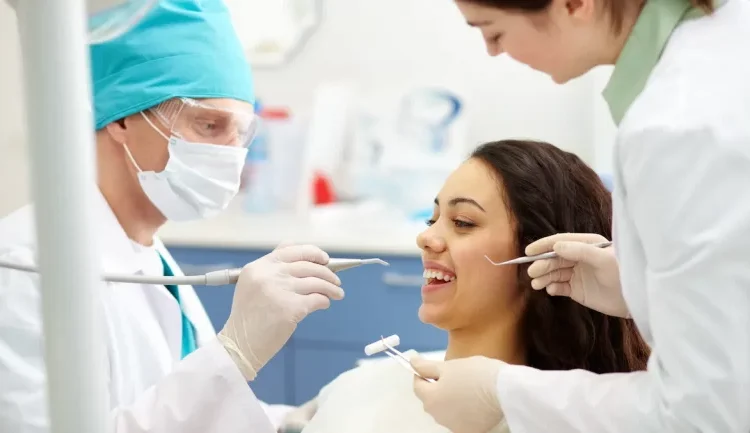
A dentist’s biography can contain a degree, several memberships, a teaching role and a description of treatments offered. Those details answer different questions. Someone considering cosmetic dentistry needs to know who can assess the problem, what experience supports the proposed treatment and when another clinician should become involved. Counting the letters after a name does not resolve all three.
This guide considers ten London practices through that distinction. The aim is to make professional profiles useful when comparing a small cosmetic change with a plan involving tooth movement, damaged teeth or several disciplines. A clinic’s range is a starting point; the experience of the person actually treating you still matters.
Understanding Qualifications When Choosing Cosmetic Dentistry in London
In her April 2023 Dentistry column on aesthetic dentistry training, London cosmetic dentist Dr Manrina Rhode distinguishes an introduction to different treatments from the deeper learning needed to carry them out. She also discusses treatment-specific training and mentoring. That published observation provides the practitioner perspective here: a course title needs context about the skills developed and the work a dentist undertakes. It is not a review of this shortlist.
The General Dental Council, usually shortened to GDC, is the UK regulator of dental professionals. Registration is a basic requirement, whereas entry on a specialist list supports use of a specialist title in that particular branch. The GDC explains that other dentists can work in those areas without calling themselves specialists. Consequently, a dentist offering cosmetic treatment and a specialist in orthodontics are not interchangeable descriptions, nor does one label automatically answer every patient’s needs.
A useful conversation connects credentials to tasks. If alignment is being changed, establish who plans the movement. If several crowns or missing teeth are involved, identify who takes responsibility for the restorative design. Professional memberships, commercial training certificates and specialist registration should be read in their own terms. None substitutes for an explanation of the proposed treatment, alternatives and likely maintenance.
How the practices were selected
The selection covers London clinics with documented cosmetic or restorative dentistry and identifiable clinical roles. Treatment range, the relationship between general and specialist work, and relevance to different levels of complexity guided inclusion. The order moves through different ways a patient may match a clinical team to a proposed plan; it is an editorial shortlist rather than a measured league table of outcomes. Published team information supports the comparisons, but does not establish the suitability of any individual treatment or independently verify every qualification claimed by a practice.
Top 10 Cosmetic Dental Clinics in London for Understanding Treatment Scope
- MaryleboneSmileClinic
The clinic at 66 Harley Street offers cosmetic treatments including porcelain veneers, composite bonding and teeth straightening. That range matters when the starting concern is an uneven smile but the appropriate type of change has not yet been established. Adding material, changing a surface and moving a tooth address different things.
The combination of bonding, veneers and straightening at MaryleboneSmileClinic in London makes the distinction between restorative and orthodontic treatment relevant to an initial cosmetic dental discussion. A patient can ask which clinician would assess each option and what experience relates to the proposed work. This keeps the conversation connected to the actual dental task. A smile simulation may help communicate appearance, but it should be considered alongside the clinical explanation, rather than treated as evidence of a dentist’s qualifications or a promised result.
- DRMR
DRMR on Brompton Road identifies Manrina Rhode as its founder and aesthetic dental surgeon, alongside other dental professionals including a hygienist and dental therapist. It offers a useful example of a practice centred on aesthetic dentistry whose different team roles should still be understood separately.
For someone attracted by a dentist’s teaching or cosmetic focus, the next step is to establish how that experience relates to their own proposed treatment. A general account of smile design is less informative than an explanation of the particular stages involved. The published training commentary discussed above can inform that question, without turning its author into an independent assessor of the clinic. Patients should also know which elements of ongoing care will involve the dentist, therapist or hygienist.
- Dawood & Tanner
Dawood & Tanner’s Wimpole Street team spans prosthodontics, periodontics, endodontics and orthodontics. Its published profiles include orthodontists Almas Husain and Chloé Rolland, as well as clinicians working in restorative and implant dentistry. This breadth is relevant when an aesthetic concern sits alongside missing teeth or an existing reconstruction.
Here, matching qualifications to tasks means tracing the plan across disciplines. The clinician designing replacement teeth may need information from the colleague assessing tooth position or gum support. It would be unhelpful to compress that arrangement into a single claim that everyone is a cosmetic specialist. Instead, the patient needs a clear account of who assesses each problem, how recommendations are combined and which clinician explains the final sequence. Several relevant specialists can contribute without all treating every patient.
- Wimpole Street Dental Clinic
Based on Queen Anne Street, Wimpole Street Dental Clinic describes prosthodontic, restorative and aesthetic work alongside orthodontics. Its referral information includes both complex restorative planning and several approaches to tooth alignment. That combination makes it pertinent to patients whose proposed cosmetic changes could involve either the position or the rebuilding of teeth.
A qualification becomes more useful when attached to a defined decision. Before agreeing to a restorative plan, for example, the patient can establish whether an orthodontic assessment would change the amount or type of work proposed. The practice’s range supports that discussion, although it cannot determine the answer before examination. Where more than one clinician is involved, the written proposal should distinguish their respective contributions rather than rely on the collective description of the team.
- The London Smile Clinic
The London Smile Clinic on Clipstone Street separates cosmetic dentist roles from specialist orthodontics in its team information. Tim Bradstock-Smith and Michelle Sayour are presented as cosmetic dentists, while Pratik Sharma is identified as a specialist in orthodontics. The distinction is useful for a reader trying to understand how appearance and tooth movement may be considered together.
The patient-facing question is not simply whether a practice offers both. It is whether the proposed plan requires orthodontic input and, if so, when that input arrives. A discussion about smile proportions could lead to restorative treatment, movement or a combination after assessment. Identifying the responsible clinician at each stage makes professional titles meaningful. It also avoids assuming that a cosmetic consultation automatically includes a separate specialist assessment.
- Harley Street Dental & Implant Clinic
This practice’s team directory distinguishes specialist roles from a special interest. It lists James Invest in prosthodontics and George Tsolakides with a special interest in prosthodontics, while other listed disciplines include periodontics, endodontics and orthodontics. Those are descriptions reported by the practice, not interchangeable categories of credential.
For a patient, that distinction is an opportunity to ask how care is allocated. A dentist with an interest in a field may undertake relevant work within their competence, while a more complex presentation may need different input. The reason for involving a particular colleague should be explained in relation to the teeth and treatment, rather than the apparent length of a biography. The presence of several disciplines also makes it worth establishing who will review the complete proposal with the patient.
- Bow Lane Dental Group
Bow Lane Dental Group in the City lists general dental care and cosmetic treatments alongside team members working in orthodontics and periodontics. Its directory also identifies dental technicians. The laboratory contribution offers another way to think about scope: some treatment stages involve people whose work differs from the examination and clinical preparation carried out by the dentist.
When a plan includes a made-to-measure restoration, the patient can ask how the clinical prescription and the laboratory design are coordinated. That does not make the technician responsible for diagnosing the patient’s needs. It helps explain how different roles contribute to the finished work. Equally, the presence of an orthodontist or periodontist is relevant only if their involvement addresses a feature of the individual plan, rather than merely adding names to it.
- Harley Street Dental Studio
Harley Street Dental Studio at 52 Harley Street offers cosmetic and restorative treatment and accepts referrals across several dental disciplines. Its referral arrangements emphasise communication with the referring dentist and involvement in treatment planning. This brings the boundary of an individual clinician’s work into focus.
Scope includes recognising when an element of treatment belongs with someone else. A patient considering cosmetic work can therefore ask what findings would lead the treating dentist to involve another colleague. If a referral is proposed, the explanation should identify the clinical question and its effect on the eventual cosmetic treatment. A wide menu of services does not mean every stage must be completed by the original dentist, or that a patient necessarily needs all the services the practice provides.
- 76 Harley Street
76 Harley Street identifies clinicians in prosthodontics, orthodontics, periodontics and endodontics. Its arrangements for referred patients include a written plan with alternatives and a report back to the referring dentist. The practice is relevant where someone wants to understand how specialist assessment translates into a defined piece of treatment.
Written planning provides a practical way to check the connection between qualifications and scope. The document should make clear which problem is being addressed, whose work is proposed and what other options were considered. A specialist title alone cannot explain whether a restoration needs replacing or a tooth needs moving. For patients comparing proposals, those explanations are more revealing than assuming that two similarly described clinicians will necessarily recommend the same course.
- Harley Street Dental Clinic
Harley Street Dental Clinic at 139 Harley Street lists cosmetic dentistry, orthodontics and restorative treatment. Its team information identifies Stephen O’Connor with orthodontics and Ilona Munslow with prosthodontics. This is a separate practice from Harley Street Dental Studio and Harley Street Dental & Implant Clinic, despite the similar geographical names.
The distinction between practices matters when checking a clinician’s profile or considering a recommendation. Qualifications belong to the individual, and treatment arrangements belong to the actual practice providing care. A patient should be able to connect the named clinician, their stated role and the proposed appointment. If the first discussion leads to another discipline, the revised plan should explain why. That is a more reliable basis for understanding treatment scope than assuming a Harley Street address conveys a particular qualification.
The most productive comparison leaves you able to describe the proposed dental task in plain language and name the person responsible for it. Where a qualification or role remains unclear, asking for an explanation is reasonable. The objective is not to master every abbreviation; it is to understand why the team’s particular skills are relevant to the treatment being considered.
Source note: Practice locations, services and team descriptions were checked against official practice information. The training perspective is drawn from Manrina Rhode’s published Dentistry column of 17 April 2023; registration and specialist-title distinctions follow General Dental Council patient guidance. The shortlist and accompanying interpretation are editorial.