

Online learning has moved far beyond recorded lectures and downloadable PDFs. What once began as a convenient alternative to traditional classrooms is rapidly transforming into a powerful global education ecosystem. As technology evolves, online education is becoming more interactive, personalized, and accessible to learners everywhere.
The future of online learning is not simply about studying on a screen. It is about smart learning systems, immersive digital classrooms, and lifelong education pathways that adapt to individual learners. From artificial intelligence to virtual reality, emerging innovations are redefining how knowledge is delivered and consumed.
The Rapid Growth of Digital Education
Over the past decade, online learning has expanded dramatically. Universities, corporations, and independent educators now deliver courses through digital platforms that reach millions of learners worldwide.
Several factors are driving this growth:
- Global accessibility – learners can access courses regardless of location
- Flexible schedules – education can happen anytime, anywhere
- Lower costs compared with traditional institutions
- Continuous skill development for rapidly changing industries
Digital education is no longer seen as a secondary option. For many learners and organizations, it has become a primary mode of education and training.
Artificial Intelligence and Personalized Learning
One of the most transformative developments in online learning is the integration of artificial intelligence (AI). AI enables platforms to analyze student behavior, progress, and learning patterns to deliver tailored educational experiences.
Future learning systems will be able to:
- Recommend lessons based on a learner’s strengths and weaknesses
- Provide real-time feedback and automated tutoring
- Adjust course difficulty dynamically
- Track learning performance using data analytics
Instead of a one-size-fits-all model, students will experience highly individualized learning journeys that improve retention and engagement.
Immersive Learning with Virtual and Augmented Reality
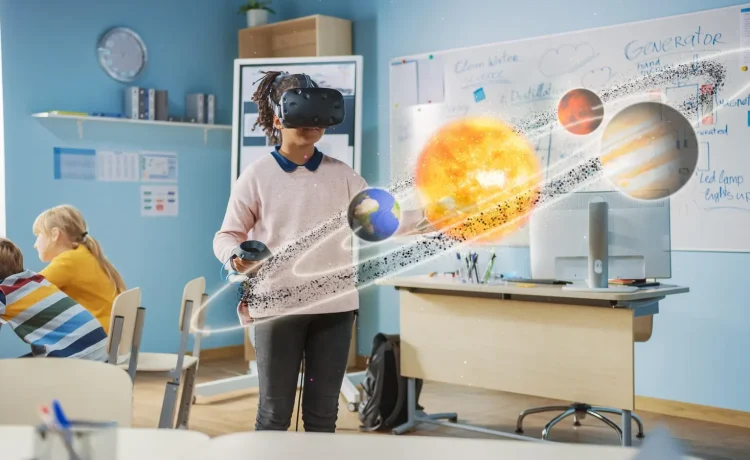
Virtual Reality (VR) and Augmented Reality (AR) are opening new possibilities for experiential learning. These technologies allow students to interact with complex environments and simulations that would be impossible in a traditional classroom.
Examples of immersive learning include:
- Medical students practicing procedures in VR simulations
- History students exploring ancient cities in virtual environments
- Engineering students assembling virtual machinery
- Science learners conducting digital laboratory experiments
Immersive education creates deeper engagement by allowing learners to experience concepts rather than simply read about them.
The Rise of Microlearning and Skill-Based Education
Traditional degrees are increasingly complemented by short, targeted learning modules known as microlearning. These compact lessons focus on specific skills that can be learned quickly and applied immediately.
Key advantages of microlearning include:
- Short learning sessions that fit busy schedules
- Rapid skill acquisition
- Continuous professional development
- Higher engagement and retention
As industries evolve quickly, professionals need constant skill updates, making microlearning an essential part of the future education landscape.
Global Collaboration and Digital Communities
Online learning is also transforming how students interact with each other. Digital classrooms now support collaborative learning environments where learners from different countries work together on projects and discussions.
Future platforms will emphasize:
- Global study groups and peer collaboration
- Real-time discussions and virtual classrooms
- Community-driven knowledge sharing
- Cross-cultural learning experiences
These collaborative spaces help learners develop communication, teamwork, and problem-solving skills essential in a global workforce.
Lifelong Learning as the New Educational Model
The traditional education model—study early in life and work afterward—is gradually changing. The future favors continuous lifelong learning.
Workers will regularly return to digital platforms to gain new skills as industries evolve. Online education makes this possible by offering:
- Flexible courses for working professionals
- Industry-relevant certifications
- Modular learning paths
- On-demand skill training
This shift ensures individuals can adapt to technological change and remain competitive in the job market.
Challenges That Must Be Addressed
Despite its potential, online learning still faces several important challenges.
Some key issues include:
- Digital divide limiting access to reliable internet and devices
- Maintaining student motivation in remote environments
- Ensuring quality and accreditation of online programs
- Data privacy and security concerns in digital platforms
Addressing these challenges will be crucial to creating equitable and effective online education systems.
What the Next Decade May Look Like
The coming years will likely see online learning evolve into a hybrid educational ecosystem where digital and physical experiences blend seamlessly.
Future developments may include:
- AI-powered mentors and virtual tutors
- Fully immersive virtual campuses
- Global credential systems recognized by employers
- Personalized education paths driven by data
Rather than replacing traditional education entirely, online learning will expand educational access and transform how knowledge is delivered worldwide.
Conclusion
The future of online learning is dynamic, innovative, and deeply interconnected with technological progress. Artificial intelligence, immersive environments, and global collaboration are reshaping education into a flexible and personalized experience.
As digital learning platforms continue to evolve, education will become more accessible and adaptable than ever before. For students, professionals, and institutions alike, embracing these changes will be essential for thriving in a rapidly changing world.
FAQ
1. How will artificial intelligence improve online education?
AI will personalize learning experiences by analyzing student behavior, recommending relevant lessons, and providing instant feedback or tutoring.
2. Will online learning replace traditional classrooms?
Online learning is more likely to complement traditional education through hybrid models rather than fully replacing physical classrooms.
3. What industries benefit most from online learning?
Technology, healthcare, business, engineering, and digital marketing industries benefit significantly due to the need for continuous skill updates.
4. What is microlearning in digital education?
Microlearning involves short, focused lessons designed to teach a specific skill or concept quickly and efficiently.
5. How does virtual reality enhance learning experiences?
VR allows students to interact with simulated environments, helping them practice skills and explore concepts in immersive settings.
6. Are online certifications valued by employers?
Many employers increasingly recognize reputable online certifications, especially when they demonstrate practical skills and industry relevance.
7. What skills will become important in the future of online learning?
Digital literacy, self-discipline, critical thinking, adaptability, and collaboration will be key skills for successful online learners.